
What Work Is
(U. of Illinois Press), Robert Bruno
For decades labor educator Bob Bruno asked his union-member students to finish the sentence “Work is ____” in six words or less. In class this was a way to initiate discussions of work based on the lived experiences of unionists from a variety of occupations and demographics in Chicago and Illinois. Now in What Work Is, Bruno has examined the thousands of responses he collected over the years both to understand how workers value their work in different ways and to suggest how we might design a better future of work. Bruno organizes his analysis around five topics: work and time; the space workers occupy; the impact of work on our lives; the sense of purpose that motivates workers; and “the people we work for, in all senses of the term.” The publisher promises that What Work Is “merges personal experiences with research, poetry, and other diverse sources to illuminate workers’ lives in the present and envision what work could be in the future.

Comment Card
(Carnegie Mellon U. Press), Jim Daniels
Allison Joseph writes that “Daniels’ poems take everything in—all our foibles and failings, our loves and refusals—and make all of it memorable, tinged with regret, but still ours, still meaningful, still worth the work and grit of poetry.” Wide-ranging topically, the publisher writes of Daniels’ chapbook that it “offers up a world of juxtapositions, searching for equilibrium between the sublime and the mundane.”

Hillbilly Highway: The Transappalachian Migration and the Making of a White Working Class
(Princeton U. Press), Max Fraser
The hillbilly highway refers to the various paths that some 8 million white southerners used to migrate to the booming industrial north in the first two-thirds of the twentieth century. As Max Fraser shows, however, the hillbilly highway went two ways. Some migrants returned home permanently, but almost all of them often visited their family and friends back home even as they prospered some in Detroit, Chicago, and many smaller industrial locations. Fraser argues that this dual rootedness created a distinct “transappalachian” culture. As the publisher explains: “As the migration became a terrain of both social advancement and marginalization, it knit together white working-class communities across the Upper South and the Midwest—bringing into being a new cultural region that remains a contested battleground in American politics to the present.”
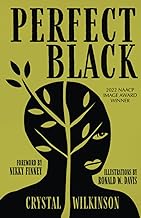
Perfect Black
(The University Press of Kentucky), Crystal Wilkinson
Crystal Wilkinson is a member of The Affrilachian Poets Collective. Her book focuses on the experience of being poor and black in Appalachia through a wide range of topics. The book is illustrated by her long-time partner, Ronald W. Davis. The Poetry Foundation says of the collection: “The narrative poems inPerfect Blackby Crystal Wilkinson invoke a world with the imagistic and geographic precision of Jean Toomer’sCane; the witty invitation of Lucille Clifton; and the rolling panoramas of Black life explored in the work of Gwendolyn Brooks… When Wilkinson grasps at the limitations of what we can control or know, she is deeply funny and cutting.”

The Urban Life of Workers in Post-Soviet Russia
(Manchester U. Press), Alexandrina Vanke
Centered on stories of local communities in deindustrializing settings in urban Russia, Alexandrina Vanke brings a novel approach to the study of everyday life in post-industrial cities. The publisher promises: “Drawing on an ethnographic study with elements of arts-based research, the book presents a new genre of writing about workers influenced by the avant-garde documentary tradition and working-class literature.” Mike Savage says the book “demonstrates how class is a powerful affective force in contemporary Russian society.” Loic Wacquant also endorses: “Drawing on a creative mix of Bourdieu, intersectionality theory and feminist geography, this deep study of postindustrial workers . . .will challenge and enrich your views of class, everyday politics and the city.”

A Machinist Name Sue
(Pride and a Paycheck), Sue Doro
Sue Doro, the author of the classic Blue-Collar Goodbyes and founding editor of the Pride and a Paycheck newsletter, has written this memoir of her life as a machinist at various shops in and around Milwaukee in the 1970s and ‘80s, including for a decade at the Milwaukee Road railroad wheel shop. According to Railroad Workers United, of which Doro is a member: “this compact memoir of her life as a single mother working as a machinist . . . exemplifies how tough and rough it was for a woman to work in the trades at the time, and still can be. Sister Sue has spent a lifetime fighting for women’s and all workers’ rights.”

Thick Skin: Field Notes from a Sister in the Brotherhood
(Anvil Press), Hilary Peach
Hilary Peach was one of the very few women in the Boilermakers Union. This book is drawn from her notes and observations during wide-ranging travels and twenty years as a welder in the union; it won the Edna Staebler Award for 2023. Kate Braid, author of Hammer & Nail: Notes of a Journeywoman, writes: “This is a wonderful book – not just funny but a rare, insider’s look at the life of a travelling welder – the good, the bad, the ugly, and always, the fascinating. A collection of hilarious stories by a master (mistress?) of repartee, it is also an homage to the trade she loved.”

Power Lines: Building a Labor-Climate Justice Movement
(The New Press), Jeff Ordower and Lindsay Zafir, editors
The rift between labor and environmental activists and the “jobs vs. environment” frame have become so ubiquitous it can seem natural and inevitable. This edited volume challenges that inevitability with both a survey and particular accounts of ongoing movements to meld economic and environmental justice movements. It explains how the interests of both movements often coincide, but it also looks at what would constitute a “just transition” in those instances where action to address climate change might actually eliminate jobs. Sarah Jaffe praises the result: “This book is a balm in troubling times, showing us that new kinds of unions and unlikely political coalitions are not just possible: they’re already here. The organizers here give an honest accounting of their failures as well as successes as they build the green economy, one farm worker cooperative or resilience hub at a time.”

Mick Lynch: The making of a working-class hero
(Manchester U. Press), Gregor Gall
Mick Lynch is the general secretary of the Rail, Maritime, and Transport Workers (the RMT) in the United Kingdom, and until 2022 he was a little-known figure to the general public. But in that year, as he engaged in a battle of words with the British press, he became a singular voice for working-class issues and vision. According to the publisher: “Facing down media pundits who thought they could walk all over him, he offered a robust critique of the government and provided workers with an authentic voice.” This book is a biography of Lynch, going back to his roots and tracing his development as a leader within the RMT. One reviewer praises the result: “Mapping Mick Lynch’s personal and political trajectory, this book is a serious and engaging attempt to dig deeper into the new forms of radical leadership that have been evolving within the labour movement.”

Alice Through the Working Class
(BlazeVOX), Steve McCaffery, illustrated by Clelia Scala
Two-time recipient of the American Gertrude Stein Prize for Innovative Writing, Steve McCaffery this time takes the tale of Alice in Wonderland and turns it on its head. Jean-Jacques Lecercle, author of Philosophy through the Looking Glass, describes the work this way: “So, having sent poor Alice down into Plunderland, the underworld of Toronto junkies, McCaffery, with his customary linguistic wit, now takes her through the working-class, into the industrial revolution, where Mary Wollstonecraft is the Red Queen, and the Soviet workers’ paradise, where Lenin is the Lion and the Unicorn is Trotsky. And, horribile dictu, it works. Don’t miss the Bolshevik Jabberwocky.”
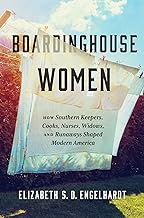
Boarding House Women: How Southern Keepers, Cooks, Nurses, Widows, and Runaways Shaped Modern America
(U. of North Carolina Press), Elizabeth Engelhardt
From the 18th into the 20th century women ran boarding houses throughout the South, and some carried them to far-flung places like New York and California. This book traces the story of these women and evaluates the impact they had on American life up to the present. The publisher explains: “Owned and operated by Black, Jewish, Native American, and white women, rich and poor, immigrant and native-born, these lodgings were often hubs of business innovation and engines of financial independence for their owners. Within their walls, boardinghouse residents and owners developed the region’s earliest printed cookbooks, created space for making music and writing literary works, formed ad hoc communities of support, tested boundaries of race and sexuality, and more.”
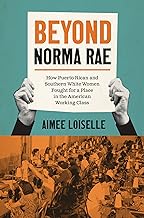
Beyond Norma Rae: How Puerto Rican and Southern White Women Fought for a Place in the American Working Class
(U. of North Carolina Press), Aimee Loiselle
In this book, Aimee Loiselle sets out both to uncover the real history of women industrial workers and to unmask how the 1979 film Norma Rae “worked to efface the labor history that formed the foundation of the film’s story.” The publisher promises: “Drawing on an impressive range of sources—union records, industry reports, film scripts, and oral histories—Aimee Loiselle’s cutting-edge scholarship shows how gender, race, culture, film, and mythology have reconfigured and often undermined the history of the American working class and its labor activism.” Eileen Boris calls the book a “tour de force [that] redefines who is the American working class. Cultural history will never be the same!”

Welcome Home, Stranger: A Novel
(HarperCollins), Kate Christensen
Kate Christensen, winner of the Pen-Faulkner award for The Great Man, centers her new book on Rachel, an environmental journalist who has largely left her working-class family behind, but upon the death of her mother must return to deal with her family and her past. Richard Russo, author of Somebody’s Fool, writes that Welcome Home, Stranger is “a revelation, offering characters as real as your family and friends, a rich, vividly drawn setting, grab-you-by-the-throat drama and always, lurking in the shadows, a fierce authorial intelligence.”

The Rediscovery of America: Native Peoples and the Unmaking of American History
(Yale U. Press), Ned Blackhawk
The winner of the National Book Award for Non-Fiction, Ned Blackhawk’s The Rediscovery of America not only supplements our traditional Euro-centric history of the US, it redefines the European part of that history as well. From the first Spanish exploration to the rise of Native American self-determination in the late 20th century, Blackhawk weaves together five centuries of Native and non-Native histories. According to the publisher, “Blackhawk’s retelling of U.S. history acknowledges the enduring power, agency, and survival of Indigenous peoples, yielding a truer account of the United States and revealing anew the varied meanings of America.”

Dogs of Summer: A Novel
(Astra House) Andrea Abreu
Andrea Abreu’s debut novel, translated by Julia Sanches, is the gritty coming-of-age story of two working-class girls growing up in Tenerife, Spain. The New York Times recommends reading the novel “for its unsparing language and vivid sense of place.” Tobias Carroll, author of Words Without Borders, writes:”Dogs of Summeris a thoroughly immersive story of youth, with all of the inequities and frustrations that that implies. It’s also […] a fascinating study of its narrator’s method of seeing the world. The prose, the rhythms, and the sense of place all combine toward a memorable whole.”

Two-Parent Privilege: How Americans Stopped Getting Married and Started Falling Behind
(U. of Chicago Press), Melissa Kearney
In this provocative book, economist Melissa Kearney takes on the “family values” crowd, by focusing on the economic causes of the decline in two-parent families as well as the economic benefits of getting and staying married. Today only a little more than half of US children live with two parents versus 80% in 1980. And, there is a strong class skew in this phenomenon: there is little decline in marriage and two-parent families among well-educated middle-class professionals, while the decline among the working class and poor is huge. For Kearney this argues for more social supports for low-wage workers and low-income families – policies like the expanded Child Tax Credit, government-funded universal pre-K for 3- and 4-year-olds, and subsidized day care for infants and toddlers, all of which were in President Biden’s original Build Back Better proposed budget in 2021.

The Deli Diaries
(Latah Books), Ella Weber
Another debut novel, Ella Weber’s The Deli Diaries follows protagonist Della as she navigates life post-art school, struggling to maintain her creative output and spirit while making ends meet behind the deli counter in her Nebraska hometown. Kirkus Reviews writes that the book is “A stream-of-consciousness tour through a shift that is at once one day and many days, with Della pontificating on life, reality shows, dating, the patriarchy, and everything in between.”

The Accidental Equalizer: How Luck Determines Pay after College
(U. of Chicago Press), Jessi Streib
This entry from Jessi Streib makes the provocative argument that the labor market for recent college graduates is so chaotic that a certain level of equality of pay accidentally emerges. Streib calls this a “luckocracy” to contrast it with our so-called meritocracy. As the publisher explains: “Streib finds that luck shapes the hiring process from start to finish in a way that limits class privilege in the job market. Employers hide information about how to get ahead and force students to guess which jobs pay the most and how best to obtain them.” The study is limited, however, to recent graduates from one business school at a “mid-tier public university.”
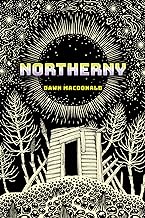
Northerny
(U. of Alberta Press), Dawn MacDonald
Dawn MacDonald’s poetry collection challenges the way that far-northerly life, including working-class life, has traditionally been portrayed. Alaska State Laureate Writer Ernestine Hayes says the “poetry is alive with curiosity and truth. She speaks in conversation at times soft and at times bitter, creating images from a reality that can be obscure yet familiar. Macdonald’s singular work reveals the unromantic beauty of a storied northern world full of lichen, kingfishers, and dog hair. Her poems open new paths in poetry from the high latitudes. This work is a bright addition to any library.”

Side Hustle Safety Net: How Vulnerable Workers Survive Precarious Times
(U. of California Press), Alexandrea Ravenelle
This book examines what happens to workers in the large low-wage, underemployed sector when the economy collapses, as it did during the Covid pandemic. Alexandrea Ravenelle defines that group as not only gig workers, restaurant staff, and other minimum-wage workers, but also as both the officially unemployed and what she calls the “forgotten jobless – a digital-era demographic that turned to side hustles.” She shows how the mammoth government stimulus programs of 2020 and 2021 substantially helped some of these people, but that “those involved in ‘polyemployment’ found themselves at the mercy of outdated unemployment systems, vulnerable to scams, and attempting dubious survival strategies.”

Pittsburghese
(Michigan State U. Press), Robert Gibb
Putlitzer-prize winning poet Tyehimbe Jess says of Gibb’s homage to Pittsburgh that Pittsburghese “is the language spoken in the pages of this poet’s singular concoction, a mix of keen musicality and uncommon sagacity that wound itself purposely and sinuously through my imagination like the twisty hills and bridges of its hometown. In the tradition of learning the sacred, secret loves of a burnished and bellowed metropolis, this poet’s voice masterfully testifies to neighborhoods and lives doused in enough heat to melt but then forged in enough wry and heart-busted love to craft the wiry steel of these poems.”

Presente, A Dockworker Story
(Hard Ball Press), Herb Mills
In 1980 workers belonging to the International Longshore and Warehouse Union (ILWU) on the West Coast refused to load weapons that were supposed to be transported to the military dictatorship in El Salvador. Presente is a historical novel based on that event and written by a San Francisco union officer who helped lead the campaign. According to the publisher, “There’s never been a more timely story than this one, showing workers standing up for justice and putting their jobs on the line.”
Political Cleavages and Social Inequalities: A Study of Fifty Democracies, 1948-2020
(Harvard U. Press), Amory Gethin, Clara Martinez-Toledano, and Thomas Piketty, editors
For fans of economist Thomas Piketty, this massive volume again displays his and his colleagues’ capacity for analyzing huge amounts of data from many countries across many decades. The aim of this study is to understand when and how other political cleavages (like those over religion, ethnicity, race, and gender) “interact with economic inequalities and contribute to reinforcing or blurring class divides.” The first chapter gives a panoramic survey of their findings, and the second chapter compares France, the United States, and the United Kingdom. As usual with Piketty, the book is well illustrated with graphics that also tell the story; these graphs are available at https://wpid.world/resources/